Training Plan for Ultra Cycling with AI Coach Help

Moved out of Compass Podcast thread.

I cycle ultra endurance length events, with my A event each year always being 1000km or more. I have been riding them every year since 2012, with my first 1000km+ event in 2013. I turn 60 this year, so very much what you would consider a masters athlete. My last 7 day volume is 16 hours 12 minutes, my weekly average for last 4 weeks is 15 hours 28 mins. When I return to base training in the autumn, I go back to about 8 hours per week and progressively rebuild.

Thought I would share an update on how my training for ultra cycling has gone. I have been following the cycling all rounder plan since mid 2022. But I have always been tweaking it, adding in additional long rides to the plan, using workout alternates. With the new web app and AI conversational coach being launched. I had a chat about adopting the plan for ultra cycling. This is what I came up with, with the AI coach assisting with my deliberations.

I started with the AI coach by giving it the details of my A event; distance, elevation gain, type of climbing, duration etc. thix gave it context of what I was training for. It has remembered this context in all more detailed conversations since. AI chat are known to be like echo chambers, I was careful to phrase the questions so it could not just reflect back my own thoughts.

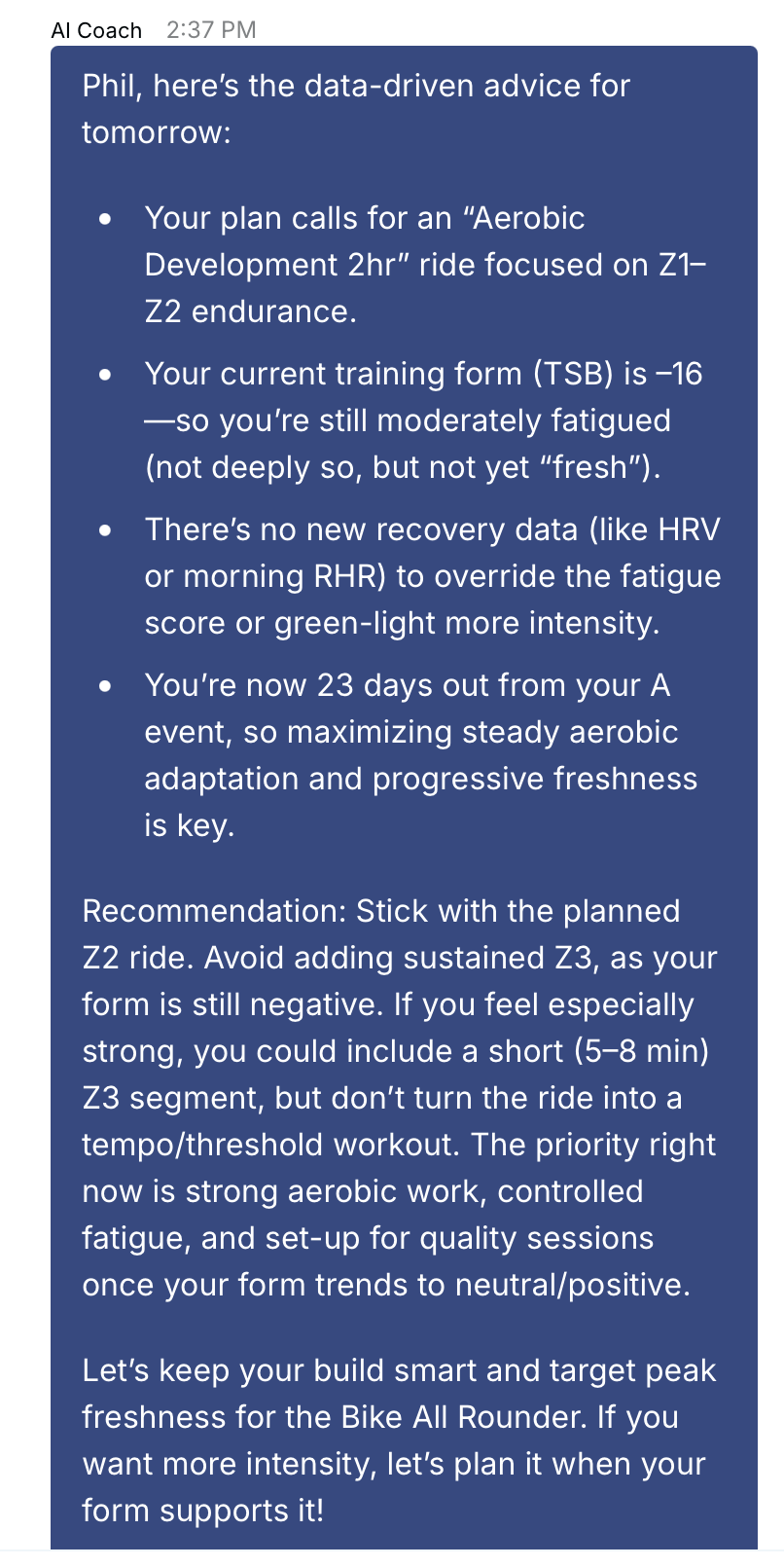
Though recently I did ask it whether to add some Z3 to a planned aerobic development session and it said no. I like that the coach said no. We all need pushback whether a human or AI coach.
Initially I setup this schedule, based on my discussions with the AI coach. The AI coach has a bias to suggest long rides at the weekend. It makes sense but Wed , Thu better suits me, and I just asked it to move the back to backs to those days in an outline build week.

Mon - Recovery ride
Tue - Tempo muscular endurance 4-6 x 8 min on a hill 1.5 hours with Z2 warm up and cool down.
Wed - Long hilly ride 4.5 - 6.5 hours in Z2
Thu - Long ride 2.5 - 4 hours in Z2
Fri - Recovery ride
Sat - VO2 Max 4-6 x 4 min on a hill
Sun - Medium Z2 - 2 hours

But I found I was not recovered enough for the Sat VO2 max session.

I changed the weekly schedule to

Mon - Recovery ride
Tue - VO2 Max 4-6 x 4 min on a hill, approx 1.5 hours including warm up and cooldown.
Wed - Long hilly ride 4.5 - 6.5 hours in Z2
Thu - Long ride 2.5 - 4 hours in Z2
Fri - Recovery ride
Sat - Tempo muscular endurance 4-6 x 8 min on a hill 1.75 hours with Z2 warm up and cool down.
Sun - Medium Z2 - 2 hours

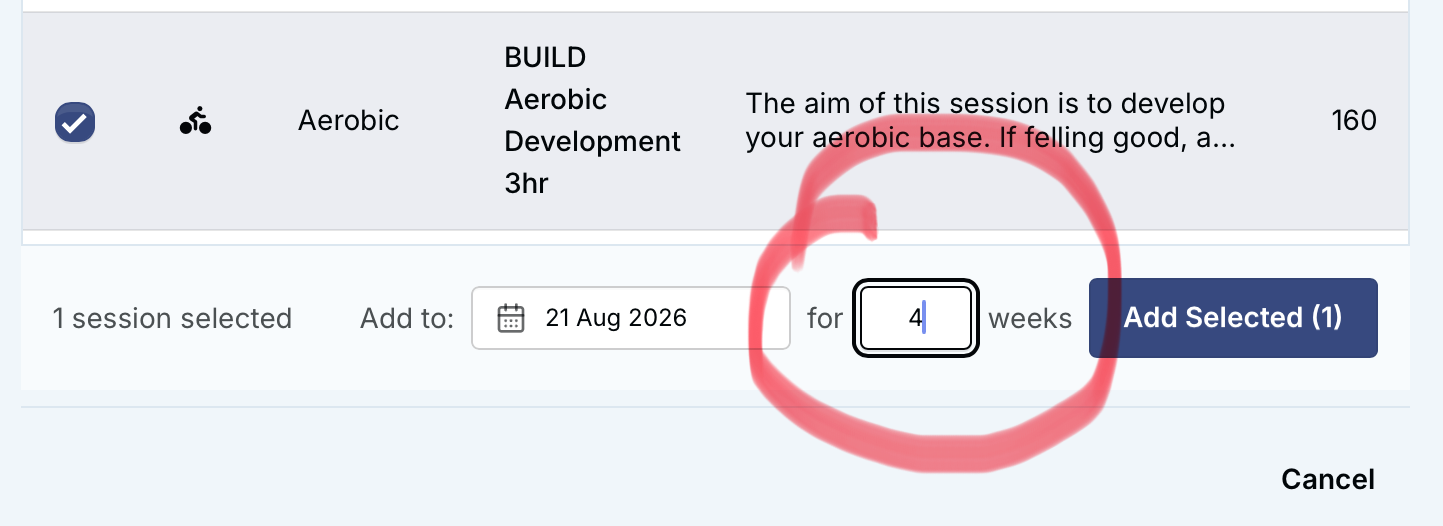
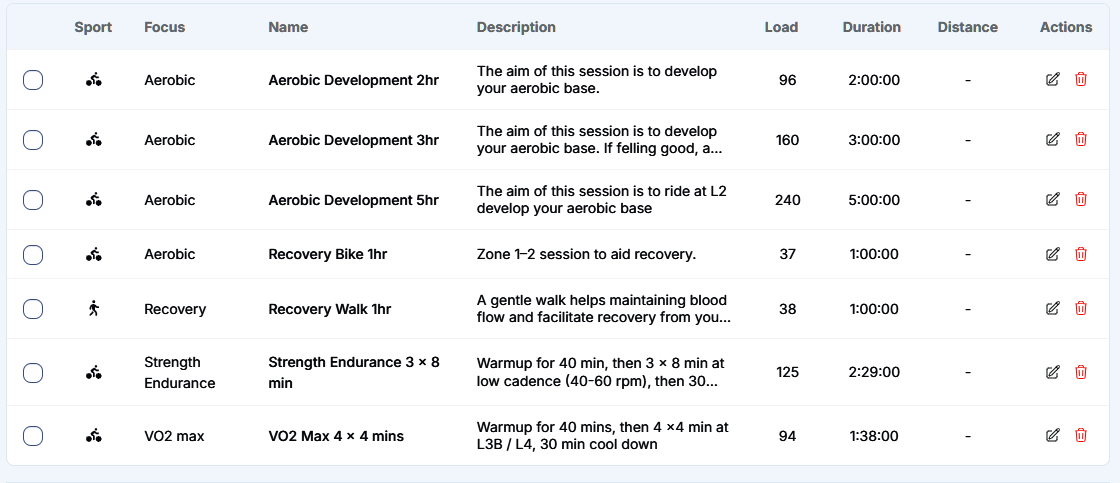
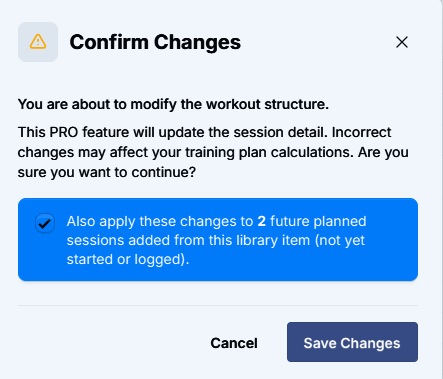
I have saved each of the sessions into my library as a template to add to the calendar, and tweak. After I have updated the calendar; I check the performance potential page to ensure my form is forecast to be in the productive zones. Then tweak again if it looks like I am going too deep or not deep enough. I did notice that if I edit the library session, it asks if I wish to update future sessions, based on that library item. This is how I now edit to reduce the number of edits.

As my event has got closer I have switched the tempo to a 2 hour Z2 ride.

This makes my weekly form look like this. I flirt with form between 0 and -8 for the VO2 max session, then push form down to -25 to -30 with the long rides. Then recover form for next week through two recovery rides and two medium aerobic development rides.
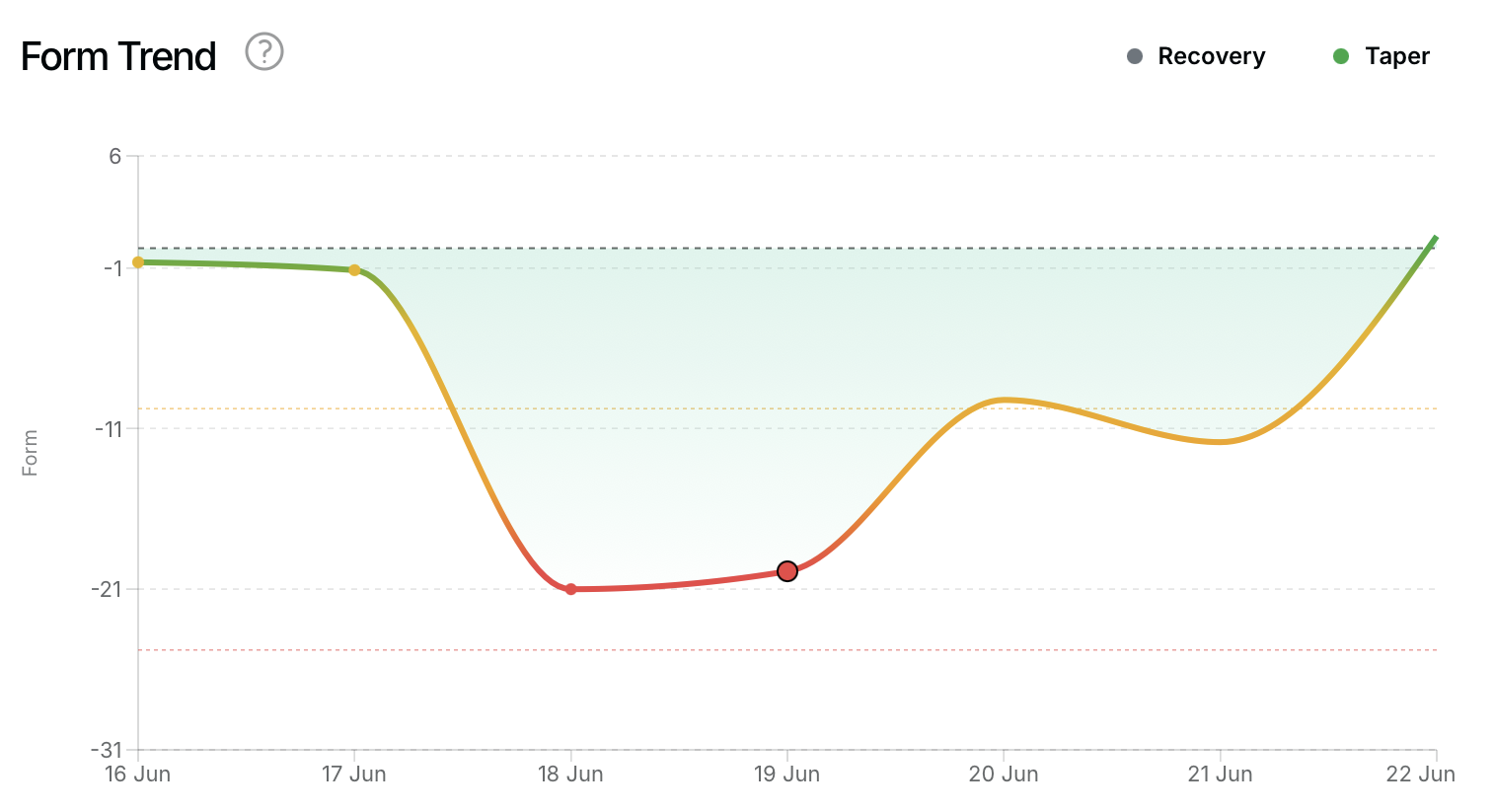
It has worked well, feeling fresh to execute the VO2 max session well, then developing fatigue resistance with the back to back long rides, topped off with the tempo muscular endurance work.

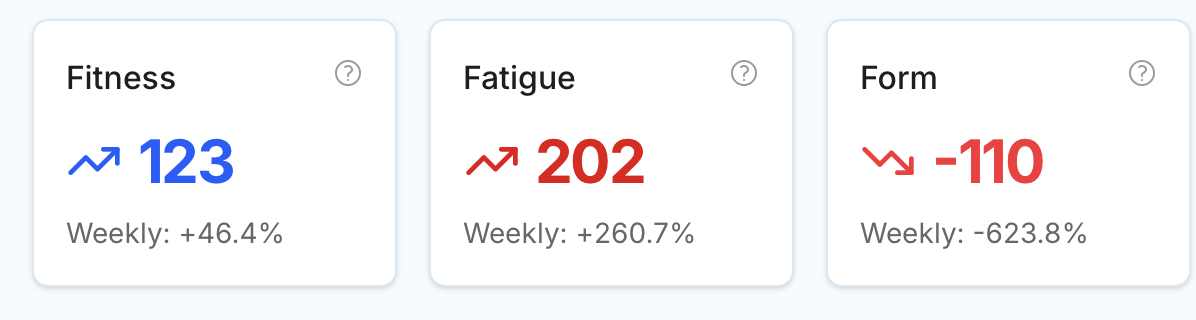
My current fitness and form look like this, just over two weeks out from my A event.
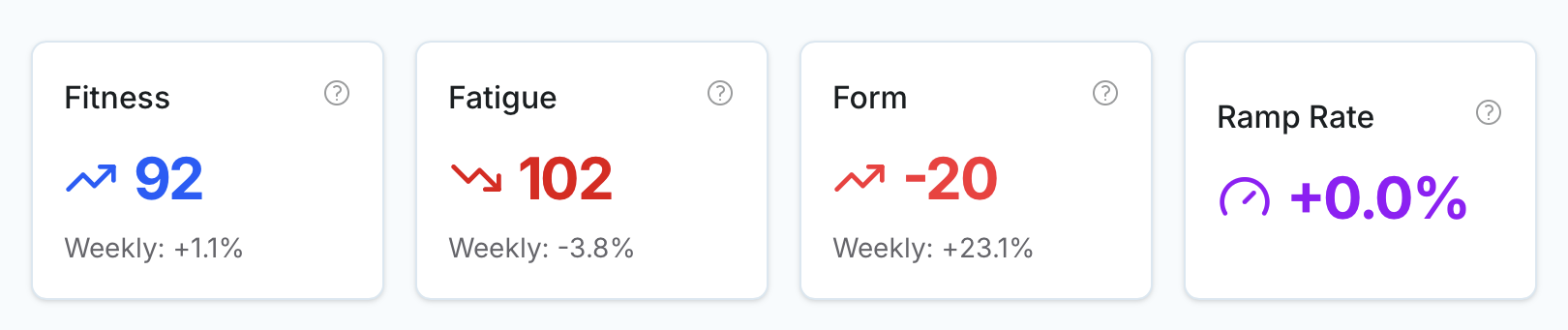
I have not chased the fitness number, just applied the progressive overload and recover principle. My ramp rate has varied between 3-6% in general. You will note forecast ramp rate for next 7 days is now 0%. I am entering my taper period.

The taper looks like this. My form pops up above zero briefly next week for my next VO2 max session. Then same pattern of long rides etc but reduced duration. Not pushing anywhere as deep. Then week before event freshness briefly pops above zero, again for a VO2 max session. Then much more reduced duration. Form rising to +18 for start of event.
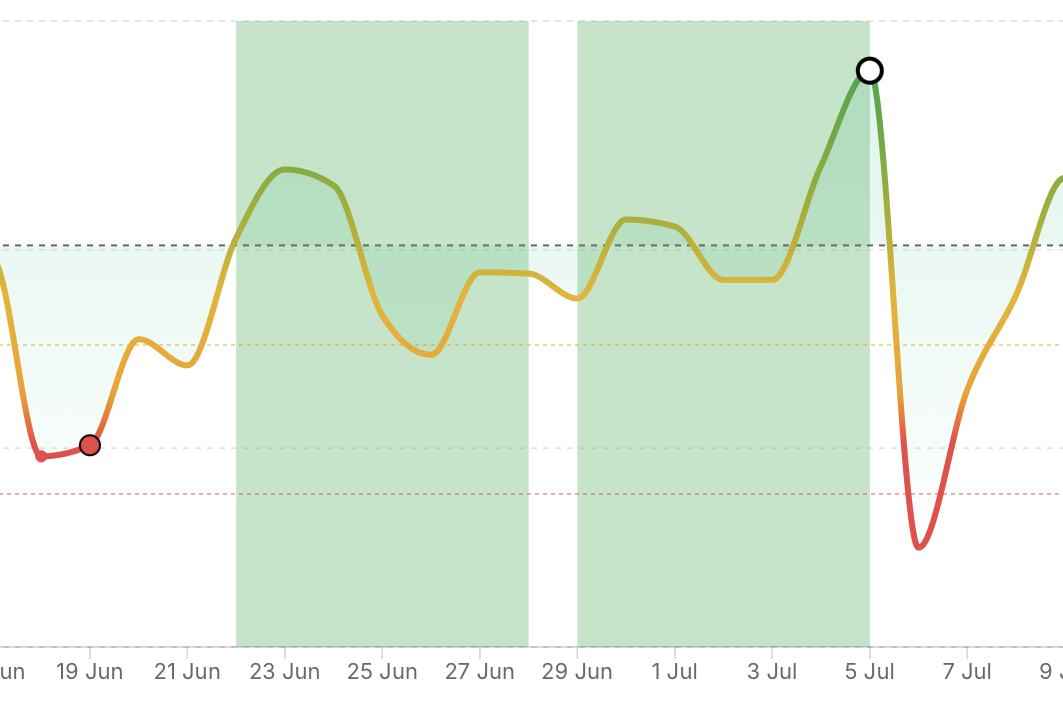
Certainly feels as though it has built my fitness over the weeks I have been doing it.

The proof of course will be the event. Though ultras are about so much more than just fitness.

Hope this is of interest, showing what I have been doing with assistance, discussing options with the AI coach.

As the @Prof says. These are all tools in the toolbox for you to pick and choose, to be used in ways it best suits the individual. Or perhaps these uses were not envisioned when they were developed!
1 Like

Thanks for sharing this, Phil. I like how you switched around the schedule to make the VO2 work, and how you used the AI coach to help you craft the plan. It looks like a really good schedule to build up the kind of volume you need to do your ultra.

1 Like

Yes, it quite useful for working through a weekly schedule and doing “what if” scenarios. Here is where I asked it to modify my sample build week, in the situation my weekly hours were maxxed out. I did not implement this template this time round; useful ideas for where I have more build meso cycles to work with or tighter constraints on hours before an A event.

Monday – Rest/Active Recovery

  • Unchanged: Dedicated rest or very light easy spin, 0:00–0:30
  • Purpose: Enable full freshness for load.

Tuesday – VO2 Max/Threshold Combo (Intervals, 1h34m)

  • Original: 4 Ă— 4 min at Z3B/Z4
  • Maxxed: 5 Ă— 5 min at Z4 (260–305W), LAST interval include “over-unders” (30 sec Z5-6 surges on top of Z4)
  • Recoveries shortened by 1 min each.
  • Add end-ride high-cadence sprints (3 Ă— 20 sec @ >400W).

Wednesday – Long Endurance Ride (5h)

  • Original: Steady Z2 (154–208W)
  • Maxxed:
    • Include “Fatigue Blocks:” Final 60 min add 4 Ă— 8 min at Z3B (227–260W) with 4 min Z2 between sets.
    • Ride last 30 min at low cadence (60 rpm) for muscular endurance.
    • Practice event-day fueling strictly.

Thursday – Endurance/Tempo with Strength (3h)

  • Original: Z2 base + Z3 tempo/strength
  • Maxxed:
    • Insert 2 Ă— 20 min “sweet spot” (245–255W, ~95–98% FTP) mid-ride
    • Add repeats of 10 min low cadence (60–65 rpm) at 90% FTP
    • Finish with high-cadence spinout

Friday – Active Recovery/Optional Neuro Work

  • Very easy spin or skills: 0:30–1:00
  • Short sprints (3 Ă— 10 sec max, long recoveries) or balance/core drill

Saturday – Event-Specific Long Ride (2h)

  • Original: Long steady Z2
  • Maxxed:
    • Start with 90 minutes Z2
    • Insert 3 Ă— 12 min at Z3B/Z4 (240–265W) in second half, each with low cadence or on a hill
    • Finish with 15 min “fast finish” at upper Z3B or low Z4 (260W+), simulating race surge
    • Use exact race nutrition/hydration protocol

Sunday – Active Recovery or “Micro-Dose Maintenance” (1h)

  • Easy ride or walk as before
  • Option: If not fatigued, add 5 Ă— 30 sec spinups (120+ rpm) with long recovery for neuromuscular “freshness”

Key Overload Strategies Used:

  • Additional/larger intervals or intensity blocks within main aerobic rides
  • Use of “fast finish,” over-unders, and more time at Z3+/Z4 in long rides, not just intervals
  • Specificity: Terrain, cadence focus, and strict event nutrition simulated
  • Progressively less recovery between efforts (shortened rests on interval work)
  • No increase in overall session durations or weekly hours.

Let me know if you want this in spreadsheet format, want alternative overload options, or want to see how to periodize this style across a cycle!

The other thing I asked about is what a base week might look like, once my events this season are out of the way. All looks sensible to me, though some overall strength conditioning work likely needs adding.

Recommended Weekly Volume:

  • Target 9–11 hours per week—this is about 75–90% of your max weekly training ceiling, balancing gains and sustainable fatigue management.
  • This reflects your recent averages while keeping you fresh for progress.

Intensity Mix:

  • 80–85% in Zones 1–2 (recovery and classic aerobic/endurance, up to 200W)
  • 10–15% in Tempo/Sweet Spot (Z3, 210–250W for you)
  • Occasional 5% (max) in Threshold/VO2 (Z4+, above 260W), only if really fresh

Monday:

  • 1 hr Recovery/Easy Spin
  • Z1–Z2 (110–200W)
  • Focus: Technique & active recovery

Tuesday:

  • 1.5 hr Endurance + Tempo
  • Mostly Z2, 15–20 min Z3A/B (210–250W)
  • Focus: Aerobic base + touch of sweet spot

Wednesday:

  • 3 hr Long Ride
  • Predominantly Z2, with 3Ă—8–10 min Z3B (230–250W), 5 min Z2 between
  • Focus: Endurance, fatigue resistance

Thursday:

  • 2 hr Endurance + Strength-Endurance
  • Z2 steady plus 3Ă—5 min Z3 (strength-endurance work, low cadence/high torque)
  • Focus: Aerobic base, muscular tension

Friday:

  • Off or 45 min Easy Spin
  • Z1
  • Focus: Recovery or rest

Saturday:

  • 1 hr Recovery Spin or Cross-Training
  • Z1
  • Focus: Very light spin, stretching, flexibility

Sunday:

  • Off
  • Full rest

Then in my library; I have cleaned it up to hold these core sessions. I found, that if I had multiple copies of sessions with different durations, or for instance more intervals then it became quite unwieldly. I will add core session templates for base when I return to that phase of my training again.

I can then populate the build weeks from my core sessions. If I update a core library session; it will prompt me to update future planned sessions based on the library session template. In this way I can apply progressive overload and recovery to the sessions in the calendar as the plan progresses.

The ideal for me of course would be able to set my own default weekly base and build weekly library templates. Thus I could just drop a whole week library template on the calendar. Personalised to my current fitness, availability, preferences and event needs, with AI conversational coach help. Then let the AI engine apply progressive overload and recovery to them without much intervention.

2 Likes