Hi all,
I want to share my experience with Athletica and its science based approach.
In my article “the coach” is - the Athletica coach, and I used what I learned from Athletica to build my own framework for my self supported 1000km Ultra approach.
The short of it, without discovering Athletica ( and the help of the platform) , I would not be were I am right now - weeks away from the adventure of a lifetime
Read on here
6 Likes
What an adventure you’re taking on, Jens. Fascinating story about your data use.
1 Like
Wow, ton of data and fascinating! FWIW I’ve also fallen into the “Oh I’m recovered, let me hit it” only to have it be a setback haha…happy to see your own learning and framework. And what a cool (and intense) event, keep us posted!
1 Like
Jens, could you send me a message to paulw@SimpleEnduranceCoaching.com? We’d like to have you join us on the Athlete’s Compass podcast to talk about your use of Athletica and all the data.
Based on your test run, and assuming performance maintained you are looking at roughly 133 hours moving. That is roughly 9.3kg of drink powder and bars. Do you plan to post it ahead or carry that extra weight from the start? Also water, you are crossing rural France. What is the plan to replenish a litre of water every couple of hours / 15km given the lack of shops?
My experience of ultra distance cycling is that heart rate gets suppressed a few days in though performance is maintained. Do not know if you will experience the sane running. But something to be aware of if setting heart rate targets. Sometimes RPE gives you a better indication as to whether you are working too hard a few days in.
email sent - cheers 
Hi Phil,
Yes interesting questions - to your first question - I have a baseline of expedition dry food with a minimum kcal I guesstimated I need based on my average metabolic testing. I plan to consume roughly 60 to 70g of carbs per hour. I try and stay aerobic the entire time. I bring all the foods with me on a trailer I pull. I have a 10 litre water bladder - that I have onboard. Plus 2 l in total in my race vest. The challenge is going to be the logistics. I may end up knocking on a few doors in rural France asking for water - I have the same experience in that regard as you ultra-cycling through rural France .
Regarding the heart rate suppression - I agree and I have seen this on previous Ultras I ran too.
However, this time I stay mainly aerobic, guardrails are not only my HR Polar H10 strap and my Suunto Race S watch. The Suunto has what they call ZoneSense. Essential it tells me if I am staying aerobic or not - despite HR suppression - and I will have Stryd power pods that are set to a power range . So I keep an eye on a few numbers that are input and output.
At the end of the day, Once I pass the 2nd and 3rd day I am going into uncharted territory on the above.
And to be honest, that’s the exciting part 
Some updates on this topic - at the time of writing I am 5 days away from Day 0 - a short ( 23km ) run with my 30 kgs trailer to the ferry port. One little secret I have been keeping to myself - especially in hindsight of the blog entry on Training for Endurance for over 50 - I am celebrating my 50th later this year ….
Also wanted to share the third part of my own blog entry on what training with Athletica has taught me and the framework I came up with .
Just watched your chat on the Athletica Youtube channel. Nice update, knowing when to stop is just as important as knowing when to push on. See @Prof named checked me as well 
Do not let fear of failure stop you. Nor see stopping as failure.
Enjoy the move back to a bit more orienteering. I used to do that, oh so many decades ago.
Cheers @Phil 
Couldn’t agree more - its always interesting how one defines failure for themselves and how other think you perceive failure - generally speaking.
I never actually thought about what “failure” looks like for this experience - I focused on what “good” and "success " looked like.
Orienteering is the foundation on which I build my house 
I think fear of failure (however you define or see it) holds many back, such that they never try. I did a 1300km cycle event in Scotland July. It had a 50% DNF (Did Not Finish) rate. I was one of the finishers and wrote an article for the organisation’s printed magazine. Should be out in next couple of weeks. Here are a couple of things I said around the subject.
Respect is owed all who started. Take on what excites you, makes you scared a little. Beyond capability. Do not let fear of failure stop you. The margins between success and failure are slim. The rider who finished, and the one who did not, are the same. Some luck is involved.
On the subject of whom the event is for.
“It is not for girls or recumbents” to misquote the Yorkie advert. Utter tosh. Jacqui proves the former and I prove the latter. It is for anyone who wants bucketloads of epic adventure, can do some planning, and has some true grit, resilience and determination. You can only gain experience by doing stuff “do or not do, there is no try”.
And (Yorkie reference)
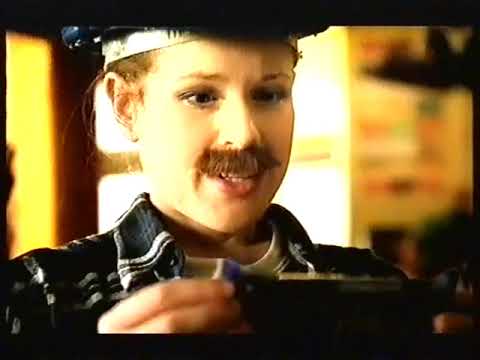
Nice one !
Reminds me a bit of my return-to-orienteering story.
I stopped competitive orienteering for 20 years. I was a German Junior National Team runner and this month 2016 I returned to the sport here in Ireland.
A lot has changed since, but not the essence of the sport. So in October 2016 I entered the British Classic Distance championship in the male 21 Elite group. All the national team runners from both the UK and Ireland used this as their selection races ( all aged in their early 20s)
I was 40 at this point. I came last in over 3 hours in the forest, and about 1.5 hours behind the winning time.
I was cold, wet, hungry and thought I was only out for 90 mins.
The feeling I had when I realised what happened, 3 hours in the forest … I was so happy, smiling form ear-to-ear. That was priceless.
So what did I learn from it? I need to do this more often: fail, analyse and learn. To get better at it
What can anyone else learn from it? I don’t know - maybe just go a bit further than you think you’d go. You might surprise yourself.